Showing posts with label Google Doodle. Show all posts

Google celebrates Fernando Pessoa


Fernando Pessoa| Norberto Nunes

Today, June 13 Google doodle celebrates the 123rd Anniversary of Fernando Pessoa, the Portuguese great writer of XXth Century!
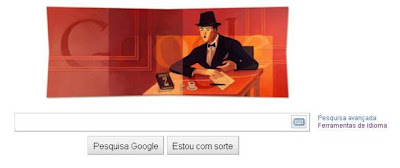


Google doodle - Fernando Pessoa

Fernando Pessoa was born in Lisbon on June 13th 1888. Following the death of his father in 1893, his mother remarried Commander João Miguel Rosa in 1895, who was the Consul of Portugal in Durban, Natal, where Fernando Pessoa was raised. 


He was awarded the Queen Victoria prize for English at the University of the Cape of Good Hope in 1903, for his achievement in an exam at the age of 15.


Profession: The most correct designation would be “translator”, the most exact would be “foreign commercial correspondent” His poetry and writing were not his profession but his vocation."

Writing obsessively in French, English, and Portuguese, Fernando Pessoa left a prodigious body of work, much of it under "heteronyms" fully fleshed alter egos with startlingly different styles and points of view.


During his life, most of Pessoa’s considerable creative output appeared only in journals, and he published just three collections of poetry in English—Antinous (1918), Sonnets (1918), and English Poems (1921) - and one collection in Portuguese, Mensagem(1933).


“He was a thin man, tenuous and frail, of medium stature, 1,73 m tall, slightly curved back. His chest was not well built; in fact it was quite sunken, despite the Swedish gymnastics he was practicing. He had long legs, not very muscular and his hands were slender and inexpressive. His awkward stride and fast pace, although irregular, denounced him at a distance.

He usually wore dark suits, grey, blue or black, at times short. He also wore a hat, normally wrinkled, and slightly tilted to the right. 

“His face was long and dry. Behind his small round glasses, of misty thick lenses, small brown eyes were hidden. His stare, when fixed on someone, was observant and sometimes even mysterious. He had a small mouth and thin lips, which were almost always shut. He had an “American” moustache which conferred him a special charm." (...)

Education:

We have the honour to know that there are several schools all over the world that teach Portuguese Literature (Universities) and Portuguese as second language (Elementary and High Junior Schools).

Some months ago, I suggested in Languages matter post different activities for students about Fernando Pessoa's poetry


"With today's technology every corner of the world is linked together. The  new generations are globalized."

Irina Bokova, Director-General of UNESCO
Message for "International Mother Day 2011"

Teaching and learning about Fernando Pessoa poetry is easier now. Just link on the website Casa Fernando Pessoa and yours students have different resources in Portuguese and English about Pessoa

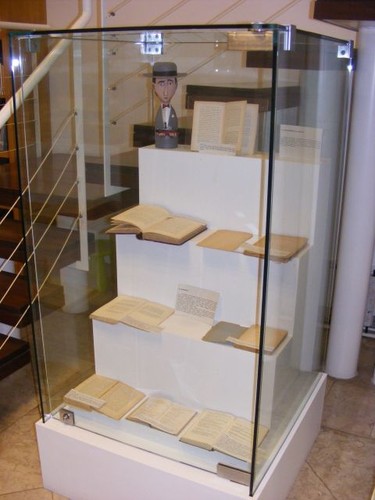
At the moment Casa Fernando Pessoa has an important bibliographic resource   online  containing some of the works which belonged to the poet personal collection read and annotated by Pessoa himself.

Due its importance and rarity, these works are normally inaccessible to the general public. 

But now, acccording to criteria of conservation and preservation, these literary writings can be consulted on digital format


Fernando Pessoa Illustration, with crow (Lisbon Symbol)


Fernando Pessoa has an unknown side of his poetry! He wrote poems for children. It's impossible not to teach these poems to the chidren. They are beautiful!

"Less than a quart of all languages in the world are used in education and in cyber space."

Irina Bokova, Director-General of UNESCO
Message for "International Mother Day 2011"

Here two different poems of Fernando Pessoa that chidren should read in Portuguese language:


As Fadas

Do seu longínquo reino cor-de-rosa, 
Voando pela noite silenciosa,
 A fada das crianças vem luzindo. 
Papoulas a coroam, e, cobrindo 
Seu corpo todo, a tornam misteriosa.
 
À criança que dorme chega leve, 
E, pondo-lhe na fronte a mão de neve, 
Os seus cabelos de ouro acaricia – 
E sonhos lindos, como ninguém teve, 
A sentir a criança principia. 

Em coisas vivas, e um cortejo formam: 
Cavalos e soldados e bonecas, 
Ursos e pretos, que vêm, vão e tornam, 
E palhaços que tocam em rabecas...
 
E há figuras pequenas e engraçadas... 
Que brincam e dão saltos e passadas... 
Mas vem o dia, e, leve e graciosa, 
Pé ante pé, volta a melhor das fadas 
Ao seu longínquo reino cor-de-rosa.

Fernando Pessoa, Poesias Inéditas


Cristina Sampaio cartoon


Liberdade


Ai que prazer
Não cumprir um dever,
Ter um livro para ler
E não o fazer!
Ler é maçada,
Estudar é nada.
O sol doira
Sem literatura.

O rio corre, bem ou mal,
Sem edição original.
E a brisa, essa,
De tão naturalmente matinal,
Como tem tempo não tem pressa...

Livros são papéis pintados com tinta.
Estudar é uma coisa em que está indistinta
A distinção entre nada e coisa nenhuma.

Quanto é melhor, quando há bruma,
Esperar por D. Sebastião,
Quer venha ou não!

Grande é a poesia, a bondade e as danças...
Mas o melhor do mundo são as crianças,
Flores, música, o luar, e o sol, que peca
Só quando, em vez de criar, seca.

O mais do que isto
É Jesus Cristo,
Que não sabia nada de finanças
Nem consta que tivesse biblioteca... 


Fernando Pessoa


You have a lot of activities for Elementary and High Junior Schools at the website Kidzlearn Lugares&Aprendizagens (Portuguese language).


"Multilingualism opens fabulous opportunities for the dialogue that is necessary to understanding and cooperation."


Irina Bokova, Director-General of UNESCO
Message for "International Mother Day 2011"

Education activities:

  • Portuguese as second language in primary and elementary schools;
  • Portuguese as foreign language in High Junior School;
  • Portuguese Literature studies in foreign Universities.

In fact Pessoa’s work was a kind of open-sesame, insofar as it alerted the rest of the world to the rich literature being produced in a small country situated on southwestern Europe’s fringe - Portugal.

G-Souto
13.06.2011
Copyright © 2010G-Souto'sBlog, gsouto-digitalteacher.blogspot.com®

UNESCO Director-General's message

Kidzlearn Lugares&Aprendizagens 

Google célèbre Jean-Jacques Audubon


Aujourd'hui Google doodle rend hommage à Jean-Jacques Audubon, célèbre ornitohologue. naturaliste et peintre américain d'origine française. 
Il est né le 26 Avril 1785 aux Cayes (Saint-Dominique. Il est consideré comme le premier ornithologue du Nouveau Monde.

Il se passionne très jeune pour l'histoire naturelle. Il a été élevé en France, à Nantes, non loin de là à Couëron, par sa belle-mère, Anne Moynet Audubon.

Il part aux États-Unis et devient contremaître dans une ferme près de Philadelphie. Il commence alors à étudier l'histoire naturelle en dirigeant la première opération de baguage du continent. 
Il noue un fil à la patte d'une moucherolle (Sayornis phoebe) et remarque ainsi que ces oiseaux reviennent nicher chaque année aux mêmes endroits.


Jean-Jacques Audubon

Il commence également à dessiner et à peindre des oiseaux.   Il a cherché un éditeur pour ses dessins d'oiseaux à Philadelphie, mais sans succès. Peut-être at-il attiré l'inimitié des sommités scientifiques de la ville, membres de l'Academy of Natural Sciences.

Alors, il part à Londres avec son portfolio et son succès fut immédiat. Il est fêté comme « l'homme des bois américain » et récolte suffisamment d'argent pour publier "Les Oiseaux d'Amérique" entre 1830 et 1839.
Son ouvrage, remarquable par l'exactitude des détails et par la beauté de l'exécution, se compose de quatre volumes contenant 435 planches grandeur nature peintes à la main.

Jean-Jacques Audubon


Audubon a été élu membre de la Royal Society, suivant ainsi Benjamin Franklin qui en fut le premier membre américain. 

Pendant son séjour à Édimbourg à la recherche de souscriptions pour son livre, il fait une démonstration de sa manière d'utiliser des fils pour déployer les oiseaux devant la Wernerian Natural History Association du professeur Robert Jameson

Un étudiant nommé Charles Darwin faisait partie du public.

John James Audubon State Park (Kentucky, USA)

Il est revenu en Amérique du Nord où il poursuit ses expéditions et achète une propriété sur l'Hudson, aujourd'hui Audubon Park.

Il est mort le 27 janvier 1851 à New York. LaMassachusetts Audubon Society, la première parmi les nombreuses sociétés savantes Audubon, a été fondée et nommée en son honneur en 1896.

Éducation:

De très belles références pour étudier dans les cours de Sciences Naturelles!

  • Audubon's Birds of America ici

  • Article John James Audubon's 226th birthday celebrated by Google sur The GuardianBen Quinn


G-Souto
26.04.2011
Copyright © 2011G-Souto'sBlog, gsouto-digitalteacher.blogspot.com®

Références: 

Jean Jacques Audubon


Google Doodle celebrates Julio Verne


Google Doodle Jules Verne 183rd birthday
(08.Feb.2011)


Today, Google celebrates the 183rd birthday of one of the most important  children's author, Jules Verne, who wrote fantastic novels like Twenty Thousand Leagues Under the Sea (1870) and Around the World in Eighty Days (1873), among many others. Google is celebrating the occasion with an interactive doodle.


It's beautifully designed and it also has a little secret! It lets you navigate down 20,000 leagues under the sea. All you have to do is drag a lever with your mouse, tap your arrow keys, or - if you're viewing the Google page on an iPad, iPhone - tilt the screen.*


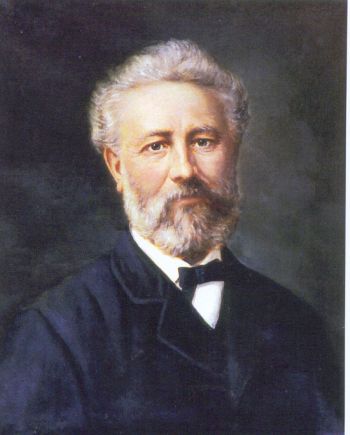
Jules Verne

Jules Gabriel Verne was born on February 8, 1828 in Nantes, in France. His novels (basically science-fiction) were all about his vision, as he wrote stories on space and underwater travel, even before spaceships and submarines existed. He is the pioneer of science-fiction genre. 

See an interesting biographical video (French) here

Verne wrote about space, air, and underwater travel before air travel and practical submarines were invented, and before practical means of space travel had been devised. 

He is best known for novels such as Twenty Thousand Leagues Under the Sea (1870), A Journey to the Center of the Earth (1864), and Around the World in Eighty Days (1873).


Verne's stories, written for adolescents as well as adults, caught the enterprising spirit of the 19th century, its uncritical fascination about scientific progress and inventions. 

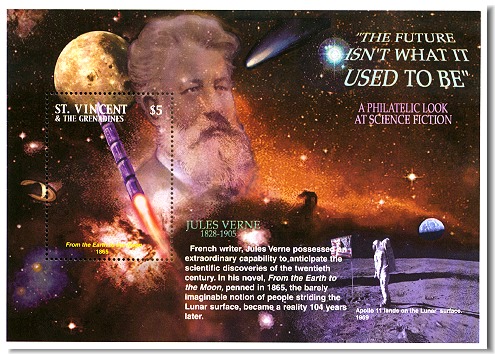
His works were often written in the form of a travel book, which took the readers on a voyage to the moon in From the Earth to the Moon (1865) or to another direction as in A Journey to the Center of the Earth (1864). Many of Verne's ideas have been hailed as prophetic. 

The pioneering ways of travel and exploration which he wrote so much about are now common-place for us, such as exploration of the moon, the north and south poles, and the use of hot air balloons for long-distance voyages. 

In his time, Verne was a true inventor and visionary; the names of his inventions and characters such as Captain Nemo, Phileas Fogg, and the submarine Nautilus have entered, and remain, a part of our popular culture.


Journey to the Center of the Earth (2008)
Among his best-known books are Twenty Thousand Leagues Under the Sea (1870) and the classical adventure story Around the World in Eighty Days (1873).

He wrote numerous short stories, essays, plays, and poems, alongside 54 extremely popular novels that only show a glimpse of the extent of his imagination.

For over 40 years Verne published at least one book per year on a wide range subjects.  Verne's oeuvre include 65 novels, some twenty short stories and essays, thirty plays, some geographical works, and also opera librettos. 

Verne's works have inspired a number of film makers. Some of his books have been made into movies and now into games.

He remains the most translated novelist in the world, according to UNESCO statistics.

Verne is often hailed in level with Hugo Gernsback and H. G. Wells, as the "Father of Science Fiction."


Education :

  • Reading: Choose a novel with your students to read in classroom;
  • Writing: Let your students explore Jules Verne's home website (English, French, Spanish, Italian) on their smartphones for an  essay about the author;
  • Drawing: Students could create a comic strip from a novel;
  • Web: Explore the possibility to let your students build a web blog in a exchange project with a French school;
  • Web 2.0: Find school partners on Facebook or Twitter;
  • Multimedia: 
1) Cartonize Jules Verne - the biographical essay, or the novel that your students  have read, could be cartonized with Convert to Cartoon, an easy way to create cartonized versions of images and drawings (students and educator)

2) Create a video with Animoto (students and educator)

An now, see below the creative 3D video animation inspired in Jules Verne's work


G-Souto
08.02.2011
Copyright © 2010G-Souto'sBlog, gsouto-digitalteacher.blogspot.com®


References:

Centre International Jules Verne

Wikipedia/ Jules Verne

Jules Verne

via @wwwery_

* via Rosa Golijan

Celebrating Agatha Christie's 120th Anniversary at school


Google doodle Agatha Christie

Did you had noticed already? Google are featuring a special Agatha Christie Google Doodle, the "Queen of Crime", on their home page to celebrate Agatha Christie's 120th anniversary

It is appearing on the Google homepage in all these countries: UK, Ireland, Slovenia, Romania, Latvia, Kyrgyzstan, Slovakia, Hungary, Israel, all Arabic speaking countries, Korea, Italy, Spain, Denmark, Spain, Norway, New Zealand, Australia, Netherlands, Germany, Portugal, Russia, Armenia, Azerbaijan, Belarus, Estonia, Kazakhstan, Morocco, Tajikistan, Turkmenistan, UAE, Uzbekistan, Finland, Suriname, Macedonia, Japan, & Lithuania.


 Agatha Christie

Agatha Christie is the best-selling author of all time.  She has sold over two billion books worldwide and has been translated into over 45 languages.  

In a writing career that spanned more than half a century, Agatha Christie wrote eighty novels and short story collections.  She also wrote over a dozen plays, including The Mousetrap, which is now the longest running play in theatrical history.


Education:

A. Are you a teacher at middle school? Why not motivate your students to participate at Christie Week 2010?


Agatha Christie tea


Students can organise an "Agatha Christie's Week" at your school, share with another students of the school or other schools in another city or country.
They can begin with a pedagogical research on the oficial site:

1. Stories and Detectives
2. The stories of Agatha Christie (using the filter to browse through her stories)
3. Christie's Detectives (M. Poirot, Miss Marple, others) 
4. Reading order (to a bibliography)
5. Sidekicks ( the role of the sidekick in crime fiction) 

But you have more! Let your students have funny moments by gaming learning!

1. Mystery figure game
2. Christie quizzes
3. Christie crosswords (vocabulary in English language)

B. And for the youngest, why not "Play 4.50 from Paddington" (free trial)?
All these activities are available here 

C. If you are a teacher in a High Junior School, don't miss the BBC archive! 


To mark the 120th Anniversary of Agatha Christie's birth, BBC Archive is realising a small collection of radio and television items in tribute to the world's most famous crime writer. We can hear from the lady herself!

What a fantastic tool to introduce crime fiction at English Literature curriculum?! Don't you agree?


For example, don't miss the audio The Misterious Dame Agatha (1st broadcast 1975) or Agatha Christie Interview (recorded 1955) where the writer talks about her lack of formal education and how boredom during childhood led her to write "The Mysterious Affair at Styles", wich was completed when she was still in her twenties...


Some Conclusions:

So as you see, even now we are talking about a formal learning as a non captivating method!

Well, there are a lot of funny and engaging activities about the "narrative text" that you can create and share with your students, on an informal learning in face-to-face teaching. 

Believe me! You will have a motivated classrooom that will learn literature, crime fiction, vocabulary, grammar... to you, "the attitude" of changing methods, and the creative mind to facilitate different learning activities at your young students!


"Colourless green ideas sleep furiously" 

Chomsky


G-Souto

15.09.2010
Copyright © 2010G-Souto'sBlog, gsouto-digitalteacher.blogspot.com® 


References:

Agatha Christie

BBC Archive Agatha Christie